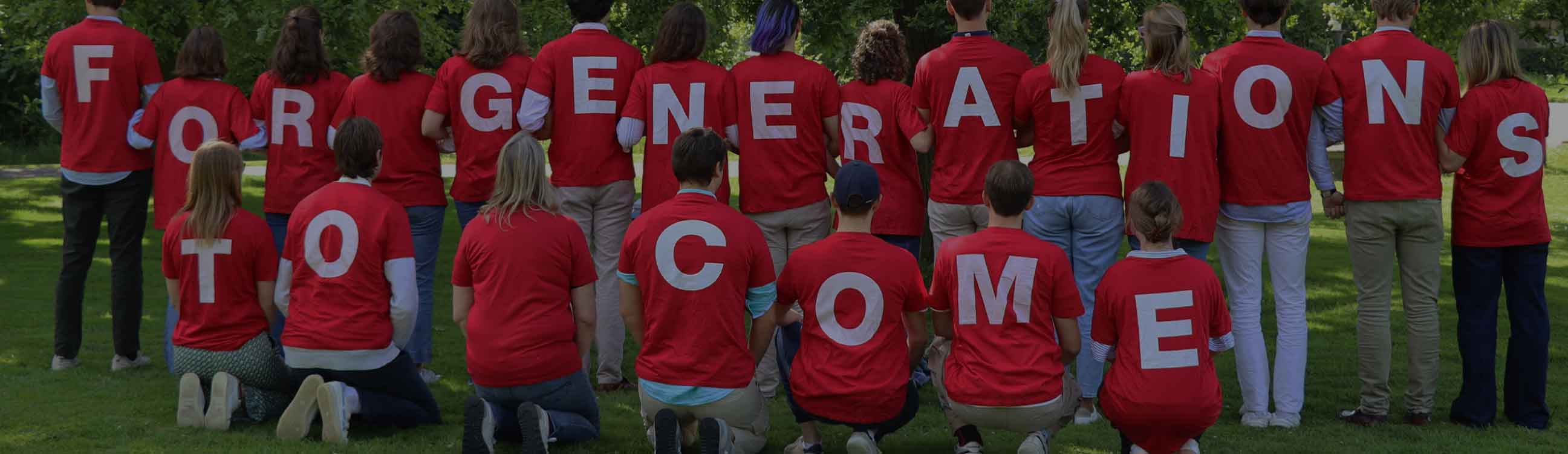
Every Group, every business activity, and every colleague is guided by a single shared purpose: to care for people, the planet, and our performance. The courage to care about a better world - both for today and for generations to come - naturally aligns with our approach to Environmental, Social and Governance (ESG). ESG is a framework used to assess an organization's material impacts on people and environment and the material effects of sustainability matters on the organization's development, performance and position.
Over the course of the year, we have continued to focus on the three key elements of ESG that we defined back in 2018: Diversity, Equity & Inclusion (DEI), Safety, and GHG (Greenhouse Gas) emissions - all of which will be discussed in more detail below.
In 2024 each SHV Group performed a Double Materiality Assessment (DMA). A DMA looks at the relevance of sustainability-related topics from two opposite perspectives and based on dialogues with internal and external stakeholders. The DMA will be updated in 2026 in preparation for the 2027 CSRD compliance reporting.
The ‘inside-out’ view considers the impact of a Group’s activities on people and the environment.
The ‘outside-in’ view, meanwhile, evaluates how the risks and opportunities that arise from these topics impact the Group’s financial performance.
The individual Group assessments were then consolidated into an SHV-wide DMA.
The aim is to develop a transparent method of reporting based on relevant sustainability-related material topics in line with CRSD guidelines. This will also enable us to allocate time and resources to the topics that have the most significant impact on our business. And it will help us to maximize positive outcomes for SHV, our stakeholders and society at large.
2024 marked our very first DMA and it involved a steep collective learning curve. One of the key take-outs was the need for a process to keep the DMA up to date over time. A strong link to the Enterprise Risk Management process, which exists for many years, is envisioned.
Understanding the interests and views of our stakeholders is essential for bringing our purpose to life, building trust in society, and solving important problems. This annual process is therefore designed to systematically collect input from both internal and external stakeholders – including customers, suppliers, NGOs, academics and opinion leaders. It will also factor in sustainability reports from other organizations, which will serve as an important benchmark for our double materiality topics.
Our 2027 reporting strategy is to obtain limited assurance (a level of assurance at an acceptable level that, based on professional judgement, is meaningful for the intended users). We will continue refining this process, updating the DMA, adjusting reporting scope, and creating a roadmap for non-financial reporting compliance in the years leading up to 2027.
European Sustainability Reporting Standards (ESRS)
ESRS E1: Climate change
Climate change mitigation
Climate change adaptation
Energy usage
ESRS S1: Own Workforce
Health & Safety
Gender equality and equal pay for work of equal value
Training and skills development
Diversity
ESRS S2: Workers in the value chain
Health and Safety
Child labor and Forced labor
ESRS G1: Corporate Governance
Corruption and bribery
Over 2025, we continued to report on the topics on which we have focused during the past few years: GHG emissions for Scope 1 and 2 emissions, Safety, and Diversity, Equity & Inclusion (DEI). Going forwards, these subjects will be integrated into the CSRD and ESRS framework.
SHV and the Groups have developed a formal structure to ensure full compliance with the CSRD reporting and disclosure requirements. This includes reporting manuals, data models based on the new reporting processes, IT systems, and organizational requirements. The SHV CSRD team is taking the lead on the material topics common to all the Groups and controlled participations, while the individual Groups will take responsibility for their own specific topics.
The EU Taxonomy is the EU’s classification system for defining which economic activities can be considered environmentally sustainable. For a corporate company, it is not a general “green label” for the company as a whole; rather, it assesses specific activities against detailed criteria. An activity is Taxonomy-aligned only if it makes a substantial contribution to at least one environmental objective, does no significant harm to the others, complies with minimum social and governance safeguards, and meets the technical screening criteria set by the EU. Its purpose is to create a common language for companies, investors and other stakeholders, and to improve transparency and comparability in sustainability reporting.
For SHV, this is mainly a reporting requirement: SHV needs to disclose how and to what extent the business activities are Taxonomy-eligible and Taxonomy-aligned, typically through the share of turnover, CapEx and OpEx associated with those activities. The EU Taxonomy remained to be an integral part of our CSRD implementation. In the first half of 2025, SHV systematically assessed its activities at the level of the Groups and NPM controlled participations for eligibility. In 2026, SHV will update its eligibility assessment to include recent acquisitions, perform alignment assessments and update its processes and systems in order to prepare for reporting over financial year 2027.
The Omnibus legislation package that was issued late 2025 only has minor impact on the CSRD implementation effort which was already underway. In 2026 we will make the necessary adjustments and ensure we are ready for reporting over 2027 at the end of 2026.
Double Materiality Assessment (DMA)
The 10 consolidated double materiality topics for the 2027 reporting cycle
Omnibus