
In 2025, we moved forward on our climate ambitions by embedding Environmental, Social, and Governance (ESG) principles and robust Greenhouse Gas (GHG) management ever more deeply across the organization.
We have now integrated the management of GHG emissions with our broader ESG strategy and the implementation of the Corporate Sustainability Reporting Directive (CSRD), reflecting both evolving regulatory requirements and our long-term commitment to sustainable business practices.
We strengthened ESG governance by closely aligning climate-related strategies with the CSRD and the latest European Sustainability Reporting Standards (ESRS). The Executive Board of Directors (EBD) retains ultimate oversight, with individual Group Boards responsible for translating SHV’s climate ambitions into operational initiatives. The ESG community and dedicated working groups, including those focused on climate-related issues, play a key role in ensuring that strategic and operational agendas incorporate the topics identified through the Double Materiality Assessment (DMA).
In 2025, we continued to report Scope 1 and Scope 2 GHG emissions in accordance with the GHG Protocol Corporate Standard, using actual activity data and recognized emission factors (including DEFRA, UK Department for Environment, Food & Rural Affairs, and IEA, International Energy Agency). These efforts were supported by enhanced reporting capabilities, enabling us to track progress in a consistent and verifiable manner. Emission reductions were driven by ongoing initiatives across the SHV Family of Companies, including:
Transition to green electricity.
Further electrification of the vehicle fleet and switching from diesel to a more sustainable Hydrotreated Vegetable Oil (HVO).
Expansion of energy efficiency projects across operations.
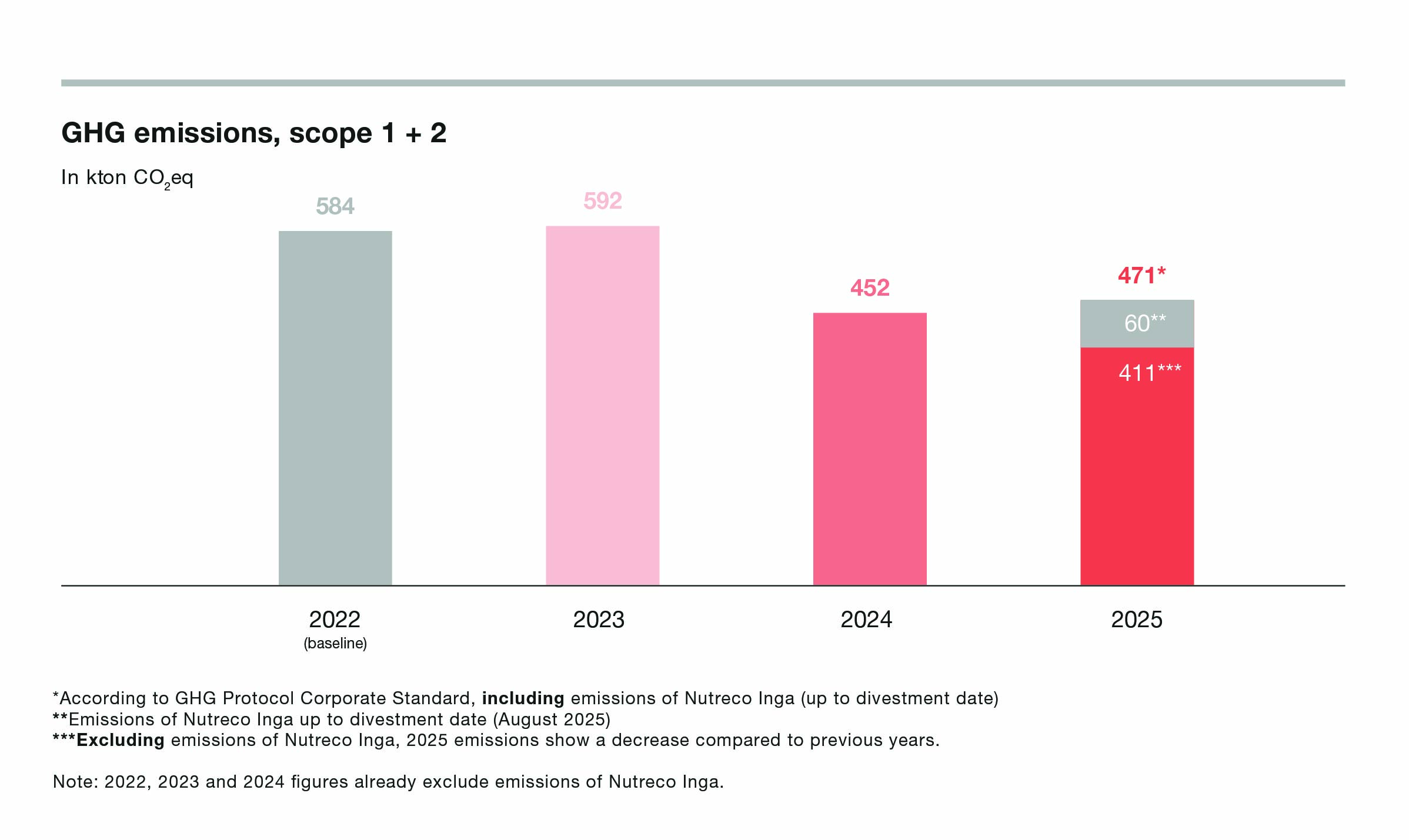
While Paris-aligned targets for all three emission scopes are still being developed, the reduction of GHG emissions remains a strategic priority. Scope 3 emissions, which represent the majority of SHV’s footprint, continue to be a key focus area. In 2025, we intensified collaboration with suppliers and service providers. Increased engagement on data transparency and joint initiatives to reduce emissions across the value chain represent just two examples.
The DMA continues to guide our climate approach. We recognize both the impact of our activities on climate change and the importance of reducing GHG emissions over time. From a financial perspective, we actively manage climate-related risks, including regulatory developments and changing stakeholder expectations, which increasingly influence our strategic decisions. In 2026 and beyond, we will continue to refine our ESG strategy to address these risks while leveraging opportunities for innovation and resilience.